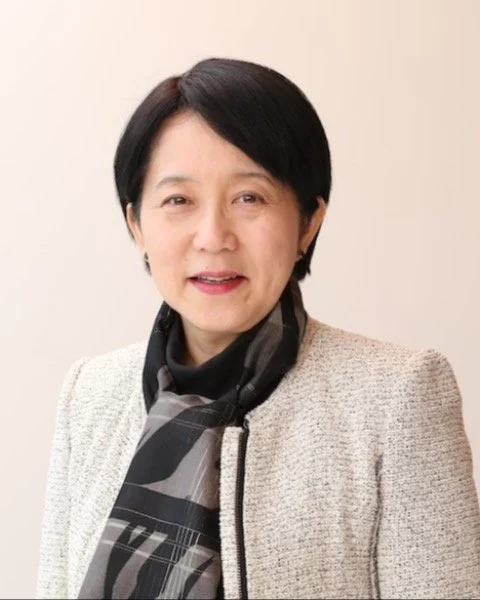
Masayo Takahashi, MD, PhD
Vision Care Inc.. and VC Cell Therapy Inc., Japan
Ritsumeikan University, Japan
Kobe City Eye Hospital, Japan
Hometown
Osaka, Japan
Current Residence
Koyto, Japan
Graduate Degree
MD, Faculty of Medicine, Kyoto University; PhD in Meicine, Graduate School of Medicine, Kyoto University
Postdoc Work
Clinical ophthalmology at Kyoto University Hospital; postdoctoral research at the Salk Institute; retinal regeneration research PI at Kyoto University and then RIKEN
Current Position
President and CEO, Vision Care Inc.. and VC Cell Therapy Inc.; RARA Fellow, Ritsumeikan University; Senior Adviser, Research Center, Kobe City Eye Hospital.
ISSCR Participation
Speaker, iPSC 20th Anniversary Symposium
-
My current focus is to turn retinal regenerative medicine from a proof-of-concept into reliable therapies that can be delivered to patients. We are developing iPSC-derived retinal cells, especially retinal pigment epithelium and photoreceptor cells, as treatments for retinal degenerative diseases. At the same time, we work on gene therapy for inherited retinal diseases, retinal organoid platforms for disease modeling and drug testing, and practical issues such as cell manufacturing, surgical methods, patient selection, and long-term follow-up. I am especially interested in building a complete system—science, medicine, manufacturing, regulation, and patient support—that makes advanced therapies accessible.
-
This work is significant because, for many currently incurable retinal diseases, replacing or repairing retinal cells may be the only realistic path to treatment. These diseases gradually take away reading, mobility, and independence, and conventional drugs cannot restore lost cells. At the same time, retinal medicine is becoming one of the first fields in which new therapeutic modalities—cell therapy and gene therapy—may be used broadly in clinical practice. Therefore, our responsibility is not limited to proving that the science works. We must also help build new regulatory pathways, manufacturing standards, reimbursement systems, and clinical networks so that safe and effective therapies can actually reach patients.
-
The most rewarding part is seeing a scientific idea move closer to a patient’s life. A discovery in a dish becomes more meaningful when a person with vision loss tells us what truly matters to them. I also enjoy building teams that include basic scientists, clinicians, engineers, companies, regulators, and patient organizations. Retinal regeneration has required many people to cross borders between disciplines and cultures. When a young researcher realizes that rigorous science can become a real medical solution, I feel that the next generation is ready to carry the field forward.
-
I had completely forgotten this, but I later found something I had written in elementary school saying that I wanted to become like Marie Curie. Perhaps that wish had remained somewhere inside me. However, my strongest motivation came much later, during my clinical work. I performed many eye surgeries and met many patients whose vision could not be restored, even with the best treatments available at the time. It made me want to go beyond existing ophthalmology and develop new therapies. Later, during my postdoctoral work at the Salk Institute, I encountered neural stem cells and began to see that the retina could be an ideal place to test regenerative medicine. The discovery of iPS cells made that vision far more realistic. Stem cell research attracted me because it sits at the intersection of basic biology, clinical medicine, engineering, and hope for patients who have very few options..
-
My advice is to start with the issues (such as patients) and the biological question at the same time. Do not choose a technique simply because it is a trend; seek for the method that can solve an important unmet need. If you look across many different fields and gather a wide range of information, you will be able to go higher and farther than you could within one discipline alone. Developmental biology, surgery, manufacturing, quality control, regulation, and ethics. Translation is a long-distance relay, not a solo sprint, so choose collaborators you trust and communicate clearly with them. Be ambitious, but never compromise on safety or evidence. Finally, if you are a physician, listen carefully to patients. They will keep you from losing your way and show you the right path。 Finally, if you are a physician, listen carefully to patients. They will keep you from losing your way and show you the right path. The only thing that matters is whether it benefits patients.
-
Prof. Fred Gage, Prof. Shinichi Nishikawa, Prof. Shinya Yamanaka, Prof. Yoshiki Sasai
-
I like to spend my free time walking around Kyoto or going shopping with my family and grandchildren. Of course, I also have to do housework, including cleaning. Because I am involved in many different kinds of work, gathering new information from the web across various fields is both part of my work and one of my hobbies. I enjoy looking beyond my own specialty and finding ideas from other areas, whether science, medicine, technology, society, or design. Sometimes those small discoveries lead to new ways of thinking about patients, research, or how advanced medicine should be delivered.
-
Peers may be surprised that I no longer think of myself only as a researcher, and that I have developed a fairly strong business mindset. I am very interested in social design and entrepreneurship. For regenerative medicine to help patients, a paper is not enough; we need companies, hospitals, manufacturing, training, reimbursement, patient education, and support for daily life. Through my experience in basic research, clinical medicine, and business, I now feel that I can understand the logic and language of all three. I hope this allows me to serve as a good translator among these worlds, so that therapies can truly reach patients.
-
What I value most about ISSCR is the global, multidisciplinary community. Stem cell science advances quickly, but translation to patients requires shared standards, open discussion, ethical reflection, and international trust. ISSCR brings together developmental biologists, clinicians, engineers, regulators, industry, and young researchers in one place. For someone working in clinical translation, that breadth is invaluable. I also appreciate ISSCR’s commitment to responsible communication and to distinguishing rigorous science from unproven interventions.